
Stop Trying. Start Observing.
What happened when I was finally forced to look at myself and see my habits for what they really are?

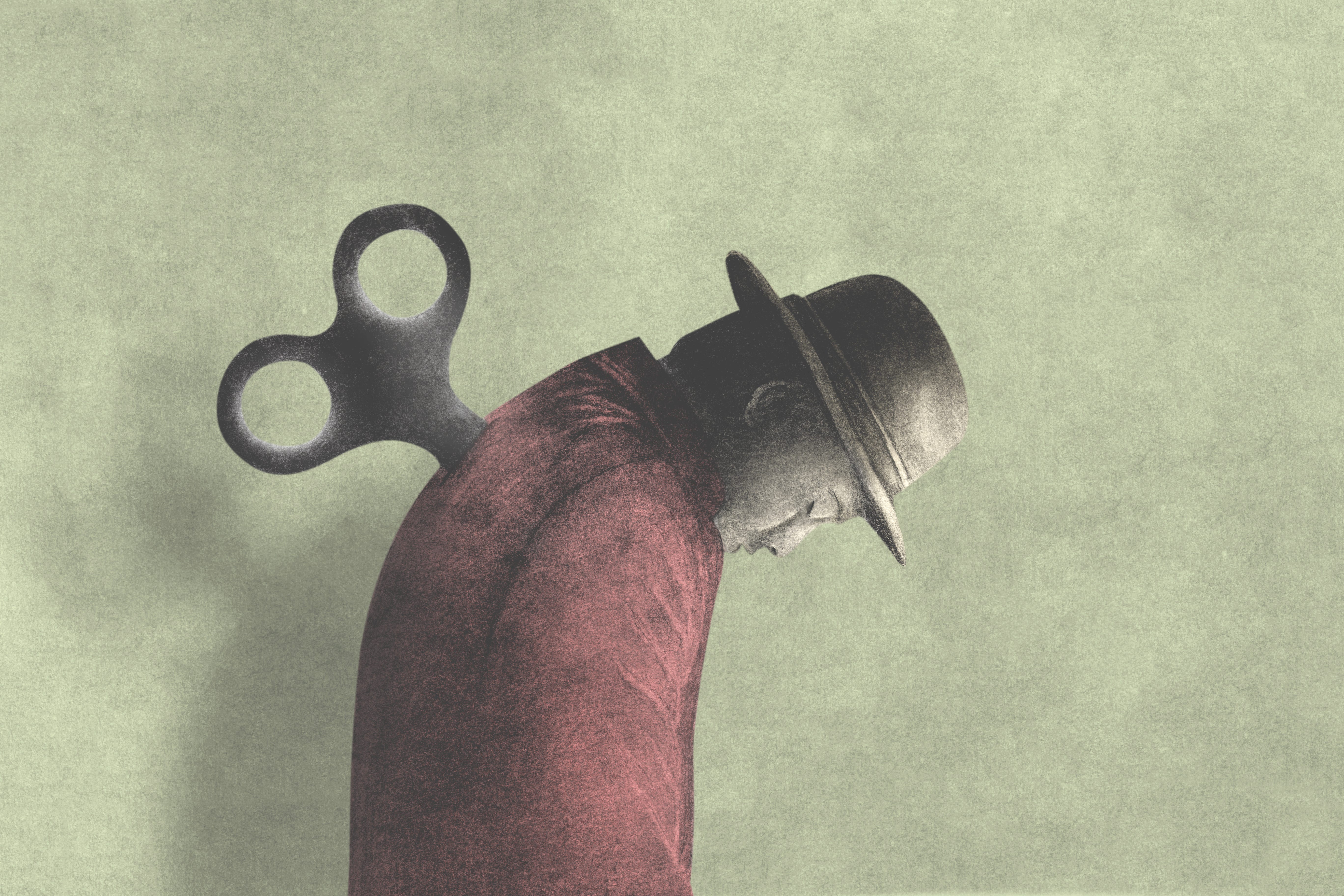
A Chilling Moment
I was sitting in a circle with twelve other participants, doing the introductions thing. When my turn came, I shared my credentials with polished confidence: “Well, my role is Head of Strategy. At the moment, I’m heavily involved in transforming the organisation’s systems and processes, making lots of changes to make us more profitable and more productive.” I felt a deep sense of pride about how important my job was and the difference I clearly made.
The woman next to me smiled and said simply: “Oh that’s interesting. I just help people change.”
Something about the way she said it stopped me cold.
In that moment, I realised I’d just described my entire professional identity without mentioning a single human being!
The uneasy feeling stayed with me for weeks. Here I was, thinking I was this brilliant complex problem solver, but I wasn’t even considering the people who were experiencing the problems.
Trying Hard to Stay the Same
What followed was years of me engaging in all kinds of development activities. I read books on emotional intelligence. I practiced ‘active listening’ techniques. I forced myself to ask people how they were feeling. At work, I’d deliberately slow down meetings, pause before speaking, gather people’s input on my ideas. At home, I’d try to involve my partner more in decisions, and spend ‘slower’ time with my children: reading, building LEGO, playing in the park.
But it felt like acting. I was performing empathy rather than feeling it. And the moment pressure hit - a tight deadline, a work crisis, my partner ‘not getting it’, I’d default right back to my old patterns.
I kept telling myself I was trying really hard to change. I had a coach, a therapist, a professional supervisor, all giving me space to tell them how difficult things were for me. How hard it was when other people just weren’t on the same page, or as quick as me, or as open, or developed.
Ufffff.
How arrogant I was. How important it was for me to be ‘right’.
Going Round in Circles
I went round and round in circles. I acted out, apologised, committed to change, only to fall back into the same traps again. I was a slow learner indeed. My intellect refused to acknowledge that I might be ‘wrong’, that I might be missing something, despite the growing body of evidence that I was gathering.
In the end the feedback to me was undeniable. Despite me thinking I was being helpful, I was clearly acting in ways that were harmful.
I was exhausted. I felt like I’d been playing developmental snakes and ladders. Climbing up the ladder of ‘changing myself’ only to come crashing down the snake of ‘falling back’ into my old default, powerfully protective patterns.
The problem was that I thought I could just tweak my behaviours, give myself a nudge, or learn a few techniques to make things smoother. What I was beginning to see was just how powerless I was in the face of myself. I was operating from a narrow bandwidth of humanity: a limited set of habits running the show and attempting to keep me safe. And I had confused how these habits operated with who I am.
The Seismic Shift
One day, while listening to me talk about how hard I was trying and how I was staying the same, my supervisor said to me: “How can you change anything when you don’t even know what’s actually happening?”
I started to explain that I knew what was happening —
And was promptly interrupted: “I don’t mean what you think is happening out there, I mean what’s actually happening in here.” And she pointed to her torso.
She told me about the practice of self observation.
The practice of paying attention to what’s going on within you, while you are engaging with the outside world.
Not when you’re reflecting afterward. Not during a coaching session. Not while journaling.
But right in the moments of your life. Right in the midst of the difficulties and dramas you experience every day.
Being able to observe what you’re thinking as you’re talking. What you’re feeling as you’re thinking. Where tension is being held in your body as you’re feeling something.
This idea stopped me dead in my tracks. It sounded so simple. So important. So radical. And I immediately loved it because it was another technique I could master.
The Shock of Observing
So I tried to observe myself.
And immediately crashed into my old patterns again. As soon as I observed something happening inside me, I judged it as wrong or unhelpful and wanted to immediately change it. I tried to squash it, push it to one side, or replace it with another ‘more helpful behaviour’.
I was simply repeating my automatic patterns on the inside of me.
I clearly had a lot more learning to do and my supervisor shared the core principles of self observation:
“Observe your patterns, your thoughts, your emotions, your bodily tensions. But without trying to fix them. Without judging them. Without trying to change them.”
The work was to simply observe them as they happen.
The Work
I started to observe myself over and over again. In real-life situations. Personal, professional. It didn’t matter. I just wanted to try and observe how I was reacting with different people and in different events.
It’s hard work to be impartial. The urge to fix, change, to become ‘better’ is very powerful. The inner critic is immediately aware of the observation and instantly judges what’s happening. And it’s painful to hear the brutally direct and honest truth that the reactions I’m caught up in are causing some level of harm.
Over time, and with lots of patient, careful observation, I started to see just how automatically I moved through much of my life. My impression of myself as a self-aware, conscious person who actively chooses their course of action became seriously challenged.
I started to sketch out the contours of my autopilot. This powerful, largely invisible process that was running most of my life. Beautifully designed to come to my aid, but so limited and narrow in its capacity to sense what was really needed in the moment.
I began to see just how narrow a range I was living life from, and how intellectually dominant my perspective was. I was like a calculator being asked to love. Much of life simply didn’t compute.
Those labels I wore so proudly: ‘over-achiever,’ ‘strategic thinker,’ ‘problem-solver,’ they weren’t who I was, they were just some automatic patterns I’d acquired to safely navigate the world. Useful at times, catastrophically limiting at others. What I thought was my greatest strength was actually my most limiting constraint.
The problem wasn’t that I had these patterns. The problem was that I identified with them, and unconsciously narrowed my perceptions and perspective so I simply couldn’t respond in any other way.
I was moving through much of life half-asleep to what was actually happening.
Sam’s Story
Last year, I was working with Sam, a senior leader who was feeling frustrated and overwhelmed with the changes happening in her organisation. Sam was trying really hard to influence the changes and often reported feeling stressed that her voice wasn’t being heard.
She tried many things to relieve her tension, to ‘ground’ herself in the face of the organisational storms, and would find our coaching sessions helpful to ‘clean her up’. But she would repeatedly feel ‘cluttered up’ a few days after our sessions. Sam was going through her own version of the snakes and ladders game.
I shared the practice of self observation with her and when she started to observe herself she discovered something shocking: the moment her boss challenged her views she felt her body tense up. She felt like there was a boiling pit of lava in her stomach and if she opened her mouth she’d flame the other person. She was caught in an autopilot reaction and wasn’t able to respond in the calm and professional way she operated in other situations.
Sam worked on this reaction. She noticed how it showed up in many walks of her life, in many of her relationships, especially with men in positions of authority. And she sat with the intense feelings of fury and fear that immobilised her.
Last month, Sam had a different observation to share. She’d been in a meeting with her boss and had been sharing her plans for restructuring her department. Her boss started questioning the budget, whether it was the right time, the roles she’d decided upon. And this time, she noticed the lava pool wasn’t quite as big, wasn’t quite as hot, and that she wasn’t quite as immobilised. She heard herself telling her boss that his questions were really valuable and that she and her team would take a look at them to tweak the plans. But that this was the right time and the roles were the right roles. Her boss agreed.
Sam’s autopilot routines are still running. And she’s continuing to observe them. When she told me this story, she said “This is hard work. But it does seem to be working. I feel like my autopilot has less of a grip on me now. And it’s amazing to have a little bit of freedom back again!”
Sam’s story isn’t unique. I’ve worked with chronic people-pleasers who say yes to everything, perfectionists who rewrite emails five times, leaders who sprint toward the finish line while ignoring the exhausted people they’re meant to be guiding. For everyone who’s made the shift to self-observation, it hasn’t been just another technique to add to the toolkit.
It’s been a fundamental shift in how they relate to themselves and their patterns.
These days, I still catch myself in the old patterns. Just last week, I was in a meeting and heard myself launching into ‘fix-it’ mode before the person had even finished describing their problem. But I caught it happening. Saw Expert Jason stepping forward, saw the machinery engaging.
The patterns are still there. The autopilot still runs. And there’s something else present now too. Something that sees it all operating.
The practice of self observation has roots in various contemplative traditions. In the West, it was most clearly articulated through the Fourth Way teachings of George Gurdjieff, who emphasised the necessity of observing oneself in ordinary life rather than in special conditions.
Red Hawk has continued this lineage, pointing to self observation as the foundation for any genuine inner work. As he puts it: “Self observation without judgement is the highest spiritual practice.”
His book — Self Observation: The Awakening of Conscience: An Owner’s Manual is the guide par excellence to this practice.
This is simply human | complex world — a space for grounded practices and personal stories as we navigate the complexity of modern life together. I work with people who are caught up in patterns they can see but can’t seem to shift. Coaching through the messy middle of developmental transitions. The kind where old patterns don’t work anymore but new capacities haven’t fully formed yet. If that’s where you are, let’s talk.